
What’s making work stressful? A look at Europe’s new mental health at work campaign
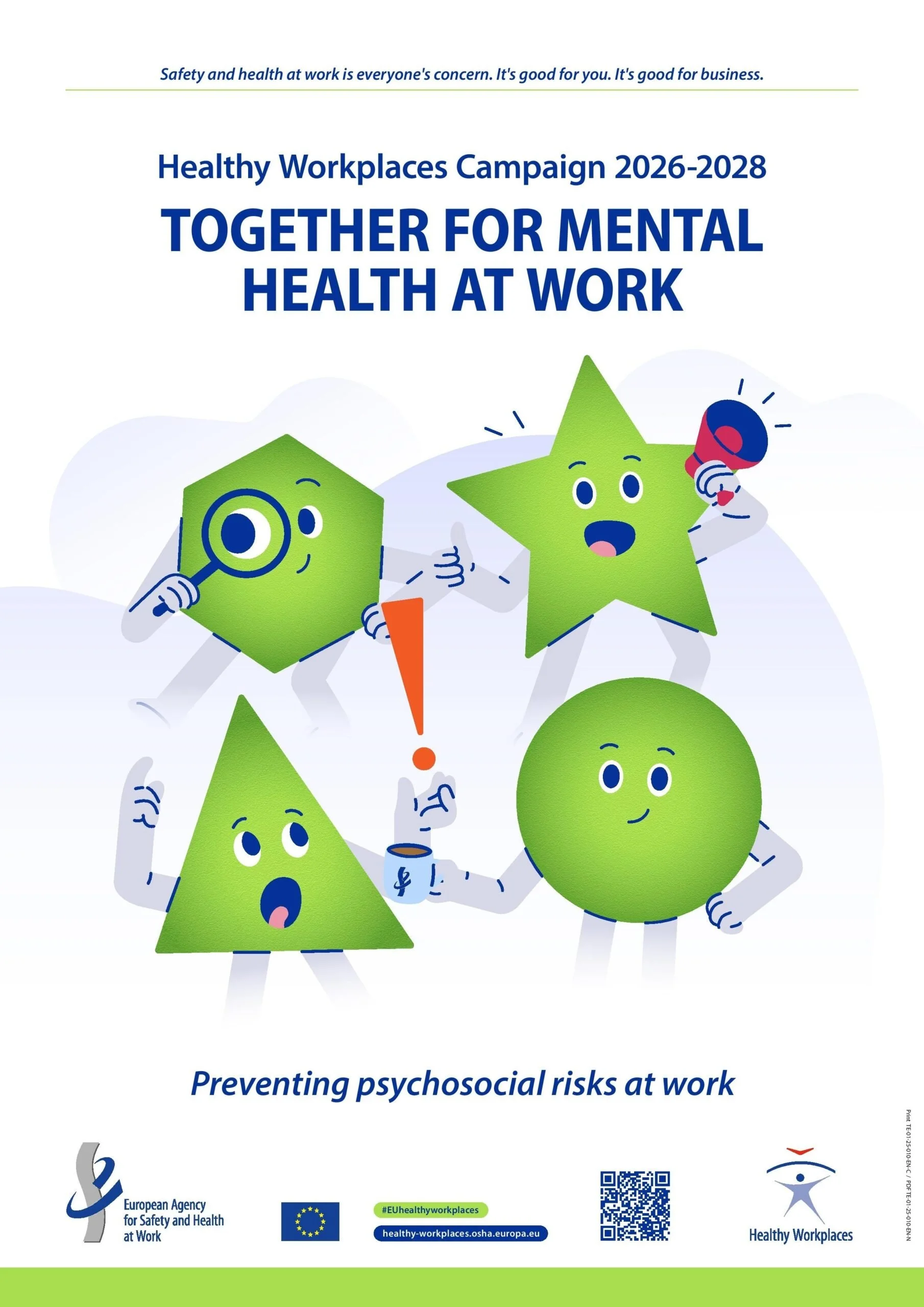
At the Health and Safety Authority’s Managing Psychosocial Risks at Work conference on 12 November, Lia Flintrop travelled from Bilbao to give us a preview of EU-OSHA’s 2026–2028 Healthy Workplaces Campaign, Together for mental health at work. Lia is a Senior Research Project Manager at the European Agency for Safety and Health at Work, and she opened with a figure that caught my attention. Poor mental health is projected to reduce EU GDP by an average of 1.7% a year between 2025 and 2050.
The figures closer to home brought the topic down to team level. In EU-OSHA’s 2025 OSH Pulse survey, 35% of workers in Ireland reported severe time pressure or work overload, and 33% reported poor communication or cooperation. More than one in four (27%) said their work had caused or made worse stress, depression or anxiety in the previous 12 months.
Time pressure stood out. Across the EU survey, workers who reported being exposed to it were more likely to report a range of work-related health problems, from fatigue and headaches to stress, depression or anxiety. The survey shows an association. For anyone managing a team, it’s a reason to ask what’s driving the pressure. Are deadlines regularly colliding? Is the team clear on what can wait? Has a new system saved time in one part of the job while adding work somewhere else?
What happens after the policy is written?
Lia shared a telling comparison from EU-OSHA’s 2024 survey of workplaces. In Ireland, 93% reported having procedures for bullying or harassment and 89% for work-related violence, compared with 62% for work-related stress. Irish workplaces also reported barriers to managing psychosocial risks, including reluctance to speak openly and difficulty accessing specialist support.
That’s where the campaign’s emphasis on prevention comes in. It starts with asking people where the pressure is coming from and involving them in deciding what needs to change. If a team is routinely stretched, that might mean agreeing which work can be dropped when something urgent comes in, spreading demanding customer-facing duties more evenly, or changing how shifts are scheduled. Managers need the skills to spot these patterns and the authority to act on them. Some changes will need to be made above team level.
What the campaign will cover
The first campaign theme, from February to May 2027, is psychosocial risk assessment and management. From there, the campaign will look at harassment, sexual harassment and violence, including how people can report concerns and what fair follow-up looks like. It will also explore how physical working conditions, such as noise and physical strain, interact with mental health.
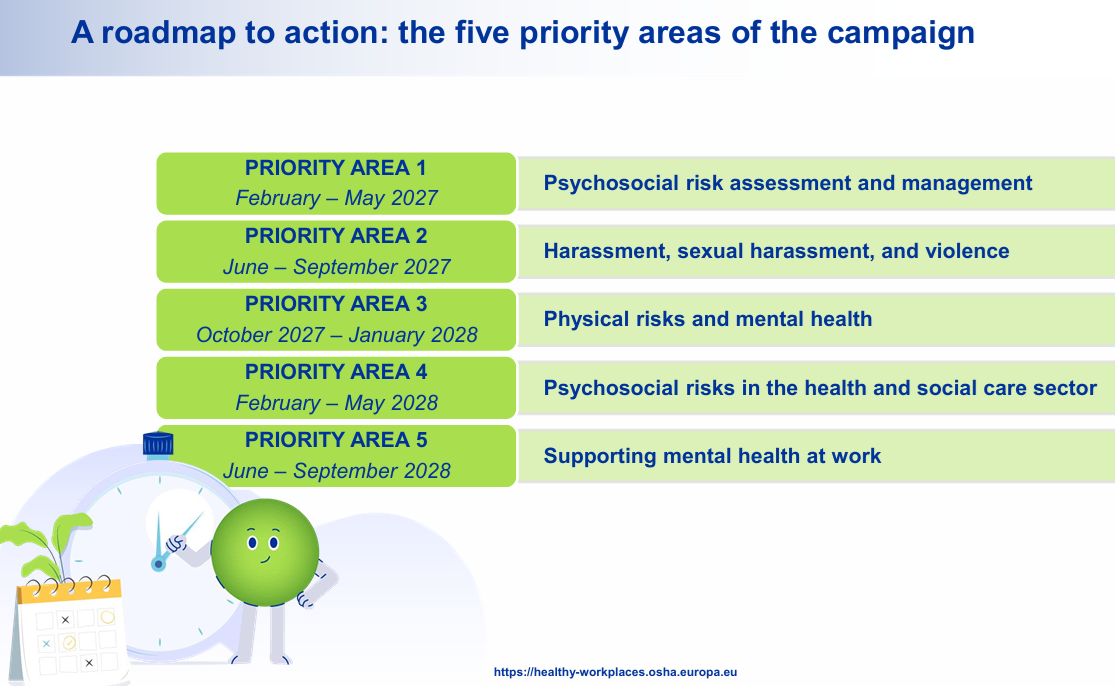
Health and social care gets a dedicated focus in early 2028. Lia shared that 31% of workers in the sector reported stress, depression or anxiety caused or made worse by their work in the previous year. The final theme looks at how to support people at work and when they return after an absence. Depending on the person and the job, that could mean flexible hours, adjusted duties or a quieter workspace. The campaign will also pick up emerging risks such as cyberbullying and the ways digital tools can intensify work or blur the boundaries of the working day.
Watch this space for the Good Practice Awards
One part of the campaign I’ll be keeping an eye on is the Healthy Workplaces Good Practice Awards. The awards are organised through national focal points and are an opportunity to share what’s working on the ground. I’d love to see Irish examples that show what changed in the day-to-day work, how employees were involved and what difference it made.
I’ll share more in Work Well Weekly as details emerge. In the meantime, you can follow the campaign and sign up for updates on the EU-OSHA Healthy Workplaces website.
Yours in health,
Brian
ABOUT THE AUTHOR
Brian Crooke is a wellbeing educator, speaker and adviser, empowering Irish organisations to promote and sustain wellbeing within their workplaces.
He is the founder of The Work Well Institute and the Workplace Wellbeing Ireland community and is Course Director of the Postgraduate Certificate in Workplace Wellness at Tangent, Trinity College Dublin. He is the host of The Work Well Podcast.
In his spare time, Brian is bringing free resistance training to every county and community in Ireland through his parkHIIT social enterprise.
THE WORK WELL COMMUNITY
The Work Well Institute - Our online education hub.
Our Workshops - Bespoke and tailored options available.
The Work Well Forum - Our private LinkedIn group.
The Work Well Podcast - Conversations with thought leaders.
The Work Well Webinars - Our back catalogue of live panel discussions and expert led presentations.
Our Services - Talks, workshops and bespoke programmes.
The Work Well Newsletter - community news and updates.
parkHIIT @ Work - Tailored resistance training workouts: online or on site.